October 08, 2026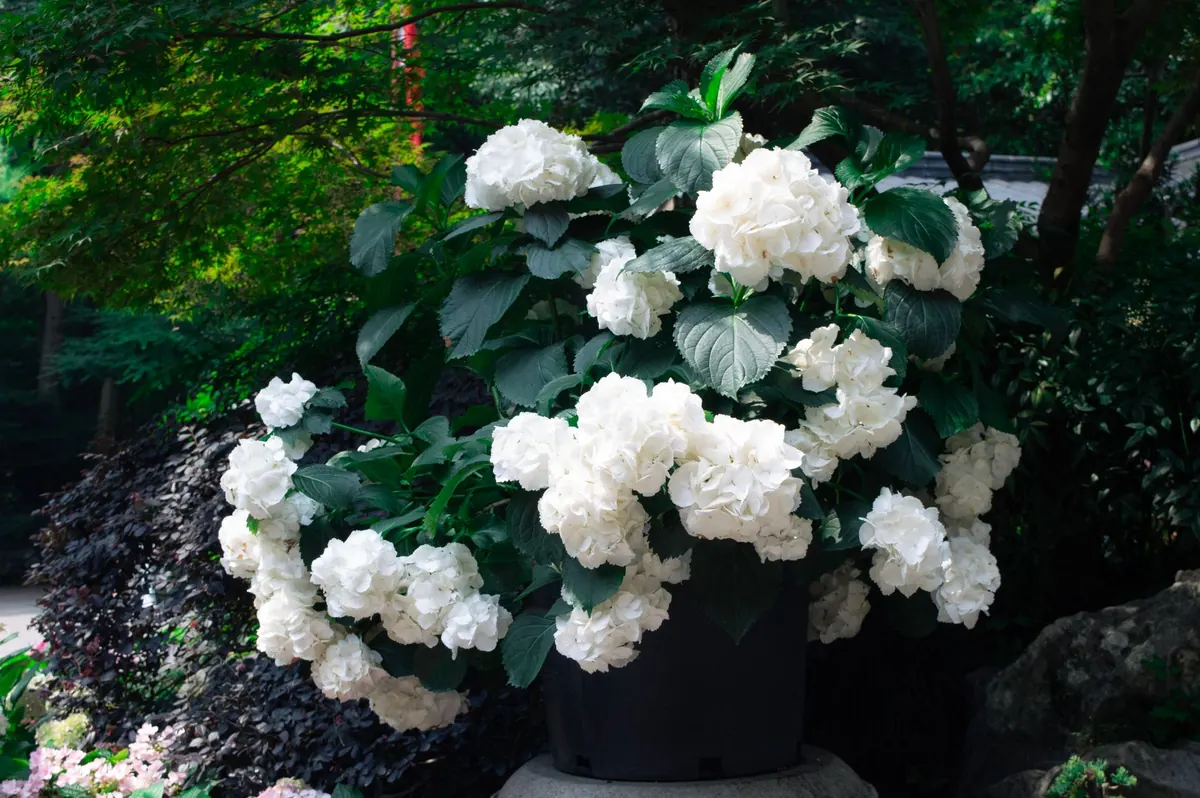
Hydrangeas are among the most generous shrubs you can grow in a British garden. Given half a chance they'll give you mopheads the size of dinner plates from July into autumn, then hold their shape through winter. Which is precisely why a plant that produces nothing but leaves is so irritating.
The good news is that flowerless hydrangeas are rarely a mystery. There are seven causes that account for almost every case, and the first one is responsible for more than half of them.
1. You pruned at the wrong time
Most hydrangeas grown in the UK — mopheads and lacecaps (Hydrangea macrophylla) and the oak-leaved type (H. quercifolia) — form their flower buds on the previous season's growth. Those buds develop in late summer and sit on the stems through winter, waiting. Cut those stems back in spring, even lightly, and you have thrown away the coming year's flowers.
Tidy these types in late summer, straight after flowering: take each flowered stem back to a strong pair of buds lower down. If the shrub is badly overgrown, spread the work over two or three years rather than cutting everything at once.
Others are the opposite. H. paniculata ('Limelight', 'Vanille Fraise') and H. arborescens ('Annabelle') flower on growth made in the same season, so they want cutting back hard in late winter or early March. Leave them unpruned and they will still flower, just smaller and higher up. So check which group you have before reaching for the secateurs — a macrophylla cut in March is the classic reason for a summer of leaves.
2. Late frost caught the buds
In most of the UK the risk of frost runs well into May, and hydrangea buds are not tough. A sharp night can kill the tips of stems carrying next season's flowers, and the plant then regrows from lower buds that only produce leaves. You often see the damage as blackened tips in June.
What helps is to avoid pushing soft growth early. Don't feed in February, mulch the root zone in autumn to keep soil temperatures even, and be ready with fleece on nights when frost is forecast. Container-grown plants are the most vulnerable, so move them against a sheltered wall for winter. If your garden is a frost pocket, lean towards paniculata and arborescens, which flower on fresh growth and shrug off a late cold snap.
3. There's too much shade
Hydrangeas cope with shade, which is why they get planted in it, but "copes" is not the same as "flowers well". They give their best with morning sun and shade from the hottest afternoon heat. A north-facing wall, the shaded side of a fence, or the dry ground under a mature tree will keep a plant alive and leafy while producing very little flower.
Competition matters too. Tree and hedge roots will take the moisture and nutrients before the hydrangea gets a look in. If you can move the shrub, do it in autumn or early spring, into a spot with a few hours of sun. Otherwise thin the branches overhead to let more light through, and water and mulch generously to reduce the competition.
4. The soil is hungry — or overloaded with nitrogen
A hydrangea in thin, sandy soil that has never been fed will put its limited energy into leaves. But it is just as easy to overdo it. General-purpose feeds and lawn fertilisers are high in nitrogen, which encourages soft leafy growth at the expense of flowers. Over-rich compost does much the same.
What to feed, and when
A balanced or potassium-rich feed from spring into midsummer suits them well. Tomato feed is a good, cheap choice, and rose feed works too. Stop by late July so the growth firms up before winter. In spring, spread well-rotted manure or garden compost around the base, keeping it clear of the stems.
Soil type is worth checking as well. On chalky or limy ground hydrangeas often struggle, showing yellow leaves with green veins — a sign they cannot take up enough iron. They prefer a humus-rich soil that stays moist. If your soil is alkaline, either grow them in a large pot of ericaceous compost or choose H. paniculata or H. arborescens, which are the most forgiving of limy ground.
5. Drought in summer
The name gives it away: hydrangea means water vessel. These shrubs have shallow, fibrous roots and wilt fast. A plant that dries out repeatedly in July may drop buds or simply run out of resources before the flowers open. Pots are worst affected — a container can dry out in a single hot day.
Water deeply once or twice a week in dry spells rather than little and often, aiming at the roots rather than the leaves, and mulch to hold that moisture in. For containers, repot into a larger size every couple of years and keep them out of the fiercest midday sun. Don't leave a pot standing in a saucer of water, though; permanently soggy roots rot, and that kills flowering just as effectively.
6. It's young, newly planted, or sulking after a move
A hydrangea bought and planted this spring often won't flower until its second or third year. They also resent disturbance, so one moved last autumn needs a season to settle. Resist the urge to feed it hard in frustration — keep it watered, mulch it, and leave the stems alone over winter. Time does the rest.
7. Old, congested plants and the wrong plant in the wrong place
A hydrangea that has sat in the same spot for fifteen years, carrying a thicket of old stems, can simply be exhausted. Renovate gradually: remove about a third of the oldest stems at ground level each year, just after flowering. That lets light and air into the plant and encourages fresh, flowering wood.
Also check nothing is eating the buds. Rabbits and deer will browse stems and buds on exposed plants, and vine weevil grubs can wreck the roots of pot-grown specimens without any obvious sign above ground.
Getting flowers next year: a simple plan
- After flowering (August–September): prune mophead, lacecap and oak-leaved hydrangeas, cutting flowered stems back to a strong pair of buds.
- Autumn: mulch around the base and leave all remaining stems intact for winter protection.
- February–March: cut paniculata and arborescens back hard to a low framework. Leave the others alone.
- Spring: start a potassium-rich feed as growth begins, mulch, and water properly once the soil starts to dry.
- May: keep fleece to hand for frosty nights, especially if you garden in a cold spot.
Pick the most likely cause, deal with it, and give the plant a full season to respond. Hydrangeas are forgiving shrubs once they're in the right place and pruned at the right moment — and when they do come back into flower, the display is worth the wait.
Photo: kuangkuang xia / Pexels